

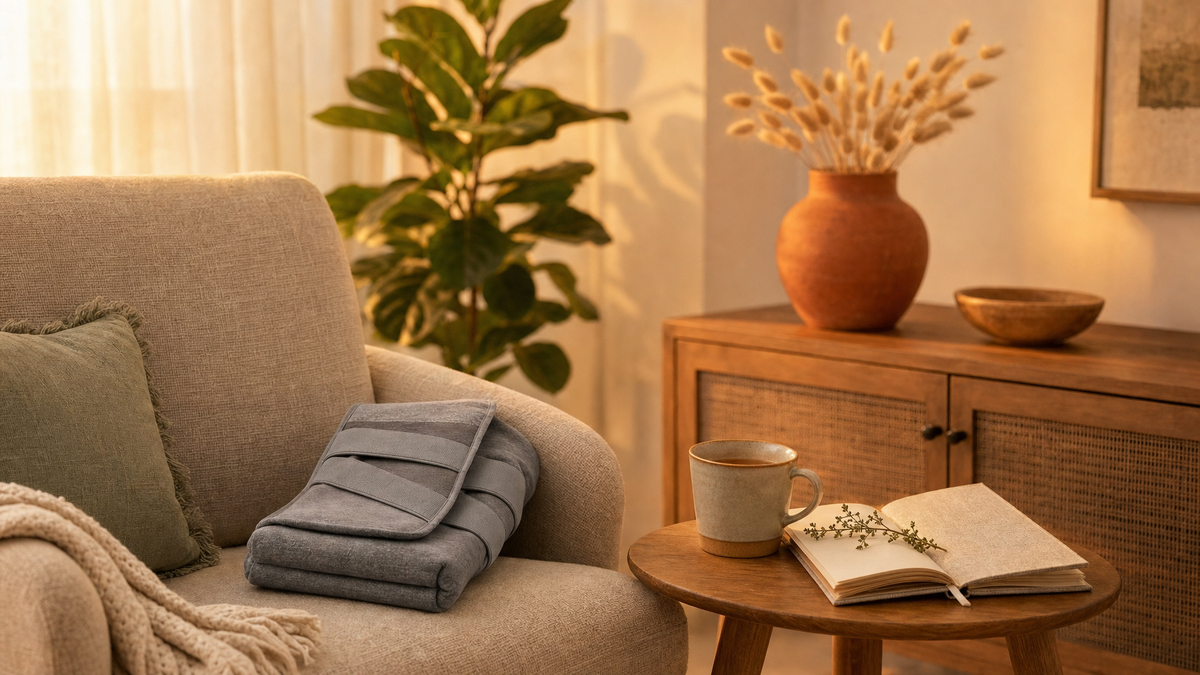
The Evening Heat Wrap Ritual: Timing, Layers, and Common-Sense Safety
By the time dinner is cleared and the house settles down, your lower back and neck often tell the story of your whole day. Hours spent sitting in office chairs, standing on hard kitchen tiles, or driving in traffic leave postural muscles tight, guarded, and slow to unwind.
Reaching for a heating pad is one of the oldest, most instinctive comfort habits there is. Yet many people use heat in ways that blunt its benefits or even irritate their skin. Turning temperature dials to maximum, pressing full body weight into heating coils, or falling asleep with a pad running all night are common missteps that turn a soothing ritual into a safety concern.
Heat therapy works best when you treat it as a deliberate, low-intensity transition from the strain of the day to evening rest. Here is how heat interacts with tight muscles, the exact twenty-minute timing window supported by clinical guidance, and the common-sense safeguards that keep your evening routine both comforting and safe.
How Heat Comforts Stiff Muscles
When skeletal muscles stay contracted for hours to hold you upright, local circulation slows down and metabolic byproducts linger in the tissue. This creates that familiar heavy, stiff sensation across the lower back, hips, and shoulders.
Applying mild heat causes local blood vessels to widen, a physiological response known as vasodilation. According to research on thermal modalities published by the National Institutes of Health (NIH), increased blood flow delivers fresh oxygen and nutrients to tired muscle fibers while flushing cellular waste. The warmth also stimulates thermal receptors in the skin, which helps calm sensory nerve activity and ease muscle guarding.
In practical terms, gentle warmth signals your nervous system that the physical work of the day is over. It softens tight connective tissue and restores pliability, making movement feel smooth again rather than guarded.
Soothe Note
Heat is designed for tight, tired, aching muscles that need relaxation. If you have a brand-new acute injury with visible swelling, heat increases blood flow and can worsen fluid buildup. For fresh sprains or acute flare-ups, cold compresses remain the right choice for the first 48 hours.
The 20-Minute Window: Why More Heat Is Not Better
When warmth feels comforting, human instinct says more time and higher temperatures must be even better. Thermal therapy works on a reverse curve: past a certain point, extra exposure adds no therapeutic benefit and increases irritation.
The Cleveland Clinic and Mayo Clinic consistently recommend limiting heat applications to 15 to 20 minutes at a time.
┌─────────────────────────────────────────────────────────┐
│              THE 20-MINUTE HEAT WINDOW                  │
├──────────────┬──────────────────────────────────────────┤
│ Minutes 0-5  │ Surface warming and initial relaxation   │
│ Minutes 5-15 │ Peak vasodilation and tissue pliability  │
│ Minutes 15-20│ Plateau of circulatory benefit           │
│ Beyond 20 min│ Diminishing return; skin redness risk    │
└──────────────┴──────────────────────────────────────────┘
Within the first fifteen to twenty minutes, local blood vessels reach their optimal dilation. Leaving heat on the same patch of skin for an hour or more does not double the relaxation. Instead, it dries out the skin, overheats superficial capillaries, and can cause mild thermal burns or a mottled net-like discoloration that dermatologists call erythema ab igne.
Treat twenty minutes as a complete cycle. If you feel you need another session later, allow your skin and deep tissues to cool completely for at least one to two hours first.
The 4-Step Evening Heat Protocol
To get the most comfort from your evening session, pair gentle warmth with mindful relaxation. Follow this four-step sequence after dinner or an hour before turning out the lights.
1. Establish Your Base Position
Sit in a supportive armchair or recline comfortably on a sofa with your knees bent and supported by a pillow. Avoid lying flat on your stomach or twisting your torso. A neutral, relaxed posture allows the muscles along your spine to soften before you even switch on the heat.
2. Add an Intervening Fabric Layer
Never place heating coils or bare thermal elements directly against bare skin. Even low-temperature heat applied directly to unshielded tissue can cause superficial irritation over twenty minutes. A light cotton t-shirt, flannel loungewear, or a thin clean tea towel provides the ideal thermal barrier, dispersing warmth evenly without hot spots.
3. Let Warmth Drape, Do Not Trap It
Rest the heating pad or wrap gently across your lower back, lap, or shoulders. Secure it lightly if using a wearable wrap, but never pull straps tight. Crucially, never lean your full body weight against a heating pad or sandwich it between your back and firm chair upholstery. Compressing a heating pad prevents normal air circulation, concentrates heat dangerously, and can damage internal wiring.
4. Hydrate and Unwind
Sip a glass of room-temperature water or herbal tea while the heat does its work. Increased blood flow works best when your body is properly hydrated. Use these twenty minutes to read, listen to quiet music, or practice slow nasal breathing. When the timer sounds, remove the pad and let your back rest naturally.
Moisture Matters: Moist Heat vs. Dry Heat
Most standard electric heating pads generate dry heat. While convenient, dry warmth can draw surface moisture from the skin during prolonged exposure, occasionally leaving skin feeling itchy or tight.
Research in the Journal of Clinical Medicine Research indicates that moist heat penetrates deeper into tissue layers faster than dry heat at equivalent temperatures. Moist heat also feels gentler on the skin surface.
You can easily incorporate moisture into your home routine:
- Lightly mist a clean cotton washcloth with water and place it between your clothing and the heating pad (ensure your pad is rated for moist heat use).
- Take a warm 10-minute shower or bath immediately before sitting with your dry heating wrap.
- Choose wraps with plush, breathable fabric covers that retain ambient humidity rather than slick plastic housings.
Three Common-Sense Safety Rules
Electric heat is gentle and accessible, but safety guidelines from the U.S. Food and Drug Administration (FDA) and health authorities should always guide your routine.
┌─────────────────────────────────────────────────────────┐
│               HEAT SAFETY AT A GLANCE                   │
├──────────────────────┬──────────────────────────────────┤
│ Safe Habit           │ Dangerous Practice               │
├──────────────────────┼──────────────────────────────────┤
│ Low to medium heat   │ Maximum heat to "force" relief   │
│ 15-20 minute timer   │ Falling asleep with heat on      │
│ Fabric barrier layer │ Direct contact on bare skin      │
│ Draped gently on top │ Trapped under full body weight   │
└──────────────────────┴──────────────────────────────────┘
1. Never Sleep with a Heating Pad
This is the single most important safety rule in home heat therapy. Both the Mayo Clinic and the FDA explicitly warn against sleeping with an active heating device.
As you drift to sleep, your body's sensitivity to temperature drops. You cannot feel if an area is becoming uncomfortably hot, and shifting position can trap the pad under your hips or torso. Always use a device with an automatic shut-off timer, and place the pad well out of reach before turning out your bedside lamp.
2. Inspect Cords and Connections
Before each use, check your heating pad for cracked cords, frayed fabric, or loose plug connections. If a heating pad shows dark scorch marks, uneven heating zones, or exposed internal wiring, retire it immediately.
3. Check for Sensitivity
If you have conditions that reduce sensation in your hands, feet, or lower back, take extra precautions. Check the skin under the wrap after five minutes to confirm it looks healthy and lightly pink, never bright red or blistered. If you ever feel burning or stinging, remove the heat at once.
Soothe Note
If you are pairing heat with soothing balms or liniments, check the ingredients first. Never apply heating pads over menthol, camphor, or capsaicin creams. The combination of chemical warming agents and electric heat can cause severe skin irritation and chemical burns.
Choosing the Right Support for Your Routine
For many people, the challenge with traditional heating pads is staying tethered to a wall outlet. Sitting upright in a supportive chair or moving around the house often feels clumsy with a short cord.
Cordless designs solve this by incorporating rechargeable lithium battery packs into ergonomic wraps. For targeted lumbar comfort, the Wireless Rechargeable Heating Pad Massager Cordless Heated Back Belt combines three soothing heat levels with gentle vibration modes. Its secure, adjustable strap accommodates waists up to 58 inches, providing balanced warmth and light support without trapping you near a wall socket.
Every SootheSage comfort essential includes free US shipping on orders over $50 and a risk-free 30-day money-back guarantee, so you can test your evening routine in your own living room with complete peace of mind.
Connecting Your Daily Comfort Habits
An evening heat ritual works best as part of a broader comfort rhythm throughout your week. If your lower back feels tense before you even leave your desk, pair your evening warmth with our Desk-Day Lower Back Comfort Checklist. And if you spend extended hours sitting at work or in the car, explore How to Choose a Seat Cushion Shape to reduce spinal pressure during the day before evening tightness has a chance to set in.
By respecting the twenty-minute window, using a protective fabric layer, and letting gentle warmth do its work without rushing, you can turn heat therapy into the most relaxing twenty minutes of your day.


