

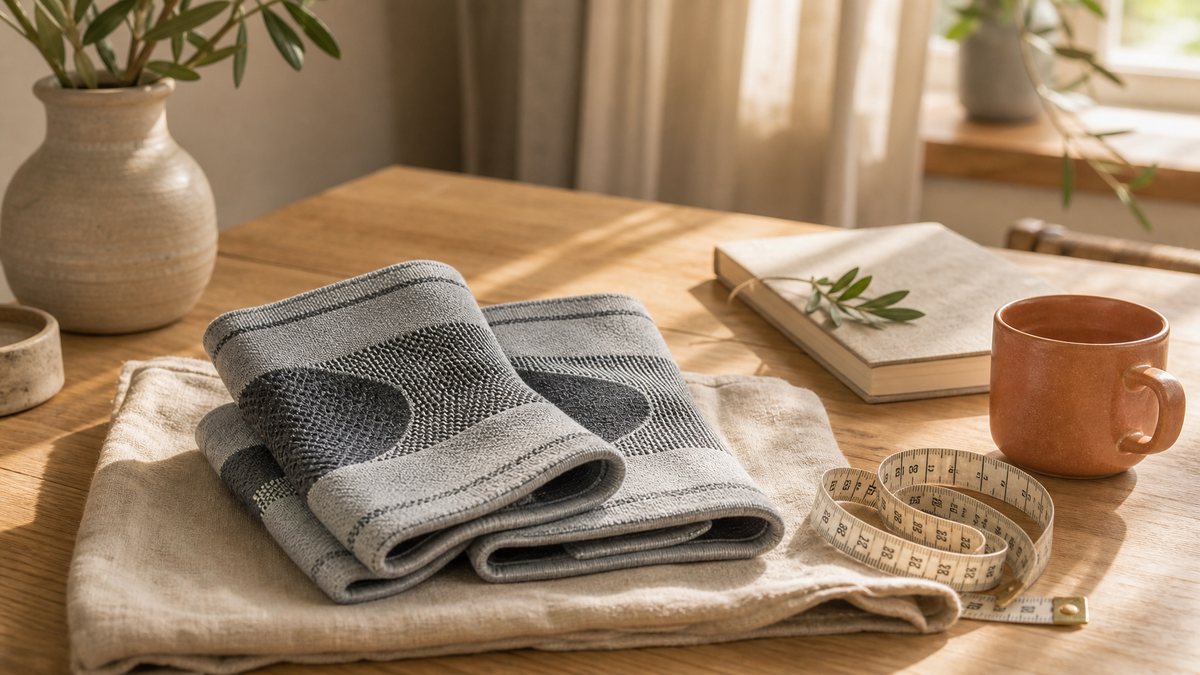
Putting on a knee compression sleeve should feel reassuring, not like a wrestling match. When the fit is dialed in, a good knit sleeve provides gentle warmth, light support, and a steady sense of stability that helps you move through your day with confidence.
When the fit is off, it quickly becomes frustrating. A sleeve that is too tight pinches the crease behind your knee, leaves angry red indentations, or rolls into a tight band. A sleeve that is too loose slides down to your ankle before you even finish walking down the driveway.
Finding the right fit and caring for the elastic knit takes just a couple of minutes. Here is your practical guide to measuring your leg accurately, checking the fit, and keeping your sleeve performing like new.
What a Compression Knee Sleeve Actually Does
Before picking up a tape measure, it helps to understand what a soft compression sleeve is designed to do, and what it is not.
Unlike rigid medical braces with metal hinges or stiff plastic uprights, an elastic knit compression sleeve does not lock your joint or mechanically prevent movement. Instead, it works through two gentle mechanisms:
- Even, circumferential pressure: Light compression encourages local circulation and helps manage everyday swelling after periods of walking, gardening, or standing.
- Proprioceptive feedback: The continuous contact of the knit fabric against your skin stimulates sensory receptors. This subtle feedback keeps your body aware of your joint position, helping you step with greater care and stability.
According to clinical guidance from the Cleveland Clinic, soft knee sleeves provide comfortable joint support and warmth for everyday activity, making them the most widely used style of knee support.
Soothe Note A compression sleeve offers gentle, flexible support for everyday movement. If you ever experience sudden sharp pain, joint locking, or rapid severe swelling, pause and consult your physician or physical therapist for an evaluation.
How Tight Should a Knee Sleeve Be?
The ideal fit can be summed up in four words: snug, smooth, and comfortable.
A properly fitting sleeve should feel like a second pair of supportive socks over your knee. It should provide noticeable, reassuring compression without pinching or restricting your circulation.
Use this simple 3-point checklist to evaluate the fit:
- The Two-Finger Test: You should be able to slide one or two fingers under both the top thigh band and bottom calf band with gentle resistance. If you cannot slide a finger underneath, the sleeve is too tight. If your fingers slide in with loose space, the sleeve is too loose.
- The Full Bend Check: Sit down and bend your knee past 90 degrees. The fabric behind your knee will naturally crease, but it should not bunch into a sharp, painful cord that bites into your skin.
- The 10-Minute Walk Test: Walk around your home, go up and down a flight of stairs, or sit and stand twice. A well-fitted sleeve stays anchored on your thigh without sliding down or needing constant tugging.
Warning Signs Your Sleeve Is Too Tight
If you notice any of the following signs, take the sleeve off immediately and size up:
- Numbness, tingling, or a "pins and needles" sensation in your lower leg or foot.
- Coolness or discoloration in your toes or lower calf.
- Deep, painful red grooves that persist long after removing the sleeve.
- Throbbing pressure or increased tightness around the joint.
How to Measure Your Knee for the Right Size
Never guess your size based on your pants size or height. Leg shapes vary widely, and accurate measurements are the only way to ensure proper support and prevent the sleeve from slipping.
What You Need
- A flexible cloth or vinyl tailoring measuring tape. (If you only have a standard metal tape measure, wrap a piece of non-stretchy string around your leg, mark it, and lay the string flat against a ruler.)
Step-by-Step Measuring Guide
- Stand up with your leg slightly bent: Stand naturally with your weight evenly distributed. Keep the leg you are measuring slightly bent at about 30 degrees (a gentle, relaxed stance, not locked straight).
- Locate the center of your kneecap: Feel for the center point of your patella (kneecap).
- Measure 4 to 5 inches above your kneecap: Using your tape measure, measure 4 to 5 inches (roughly 10 to 12 cm) straight up your thigh from the center of your kneecap.
- Wrap the tape around your thigh: Wrap the tape snugly around your lower thigh at that exact mark. The tape should sit flat against your skin without digging in or hanging loose. Note this circumference.
- Measure 4 to 5 inches below your kneecap (optional but helpful): Measure 4 to 5 inches down from your kneecap onto your calf and record that circumference as well.
Soothe Note If your measurement falls right on the boundary between two sizes, consider how you plan to use the sleeve. For higher-activity use where firmer hold is desired, choose the smaller size. For all-day comfort, extended desk sitting, or if you have sensitive skin, choose the larger size.
Why Do Knee Sleeves Roll Down? (And How to Stop It)
The single most common complaint with knee sleeves is rolling or sliding down during movement. Here is why that happens and how to easily fix it:
- Incorrect Sizing: A sleeve that is too small gets pushed down by thigh muscle expansion, while a sleeve that is too large lacks the tension needed to grip. Measuring accurately solves most slipping issues.
- Lotions and Body Oils: Applying moisturizing lotions, body oils, or topical ointments right before putting on your sleeve creates a slippery layer between your skin and the fabric. Always ensure your skin is clean and completely dry before sliding on your sleeve.
- Improper Positioning: Make sure the center weave or kneecap ring sits squarely over your kneecap. If the sleeve is pulled too high or too low, natural joint movement will quickly drag it out of place.
For dependable daily movement, our Compression Knee Brace Sleeve 2-Pack is crafted with a 4-way stretch breathable circular knit and double non-slip silicone wave grips along the top hem, helping it stay securely in position throughout your active day.
Daily Care and Washing: How to Keep the Elastic Strong
Knee sleeves absorb sweat, skin oils, and microscopic friction during daily wear. Washing your sleeve regularly is not just about freshness, sweat salts and oils break down elastic fibers over time if left unwashed, causing the sleeve to lose its compression and stretch out permanently.
Follow these simple care rules to extend the lifespan of your sleeves:
1. Hand Wash or Gentle Machine Cycle
Hand washing in cool or lukewarm water (around 86°F / 30°C) with a mild liquid detergent is the safest method. If using a washing machine, place the sleeve inside a mesh laundry bag and select a delicate, cold-water cycle.
2. Skip Fabric Softeners and Bleach
Never use fabric softeners, bleach, or harsh stain removers. Fabric softeners coat the synthetic elastic fibers, ruining their moisture-wicking properties and degrading elasticity.
3. Air Dry Flat (Never Use the Dryer)
High heat breaks down elastic fibers quickly. Never put your compression sleeve in a tumble dryer, and do not place it directly over a hot radiator. Instead, gently press out excess water with a clean towel (never wring or twist the fabric) and lay it flat to air dry away from direct sunlight.
4. Rotate Two Pairs
If you wear knee sleeves daily, keep two pairs in rotation. Letting an elastic garment rest for 24 hours between wears allows the knit fibers to rebound to their original shape, significantly extending the life of each pair.
Soothe Note With regular daily use and proper washing, quality knit compression sleeves maintain their supportive tension for about 6 to 12 months. When you notice the fabric feels loose, slips down despite clean skin, or no longer provides firm resistance, it is time for a fresh pair.
Simple Habits for Everyday Knee Comfort
A well-fitted compression sleeve is a helpful companion for your daily routine. Paired with comfortable footwear, regular gentle walking, and a few minutes of daily mobility, it helps you stay active, confident, and comfortable in the activities you love.


